The Pune Paradox
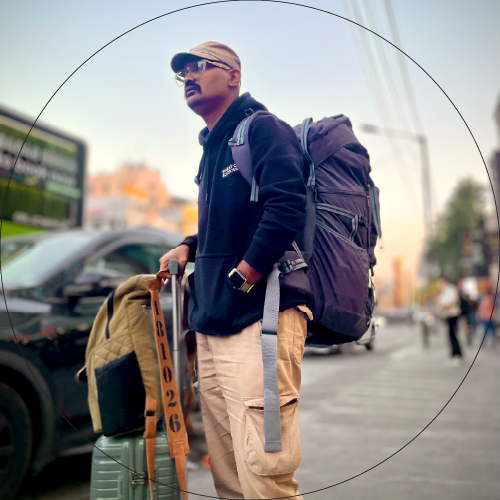
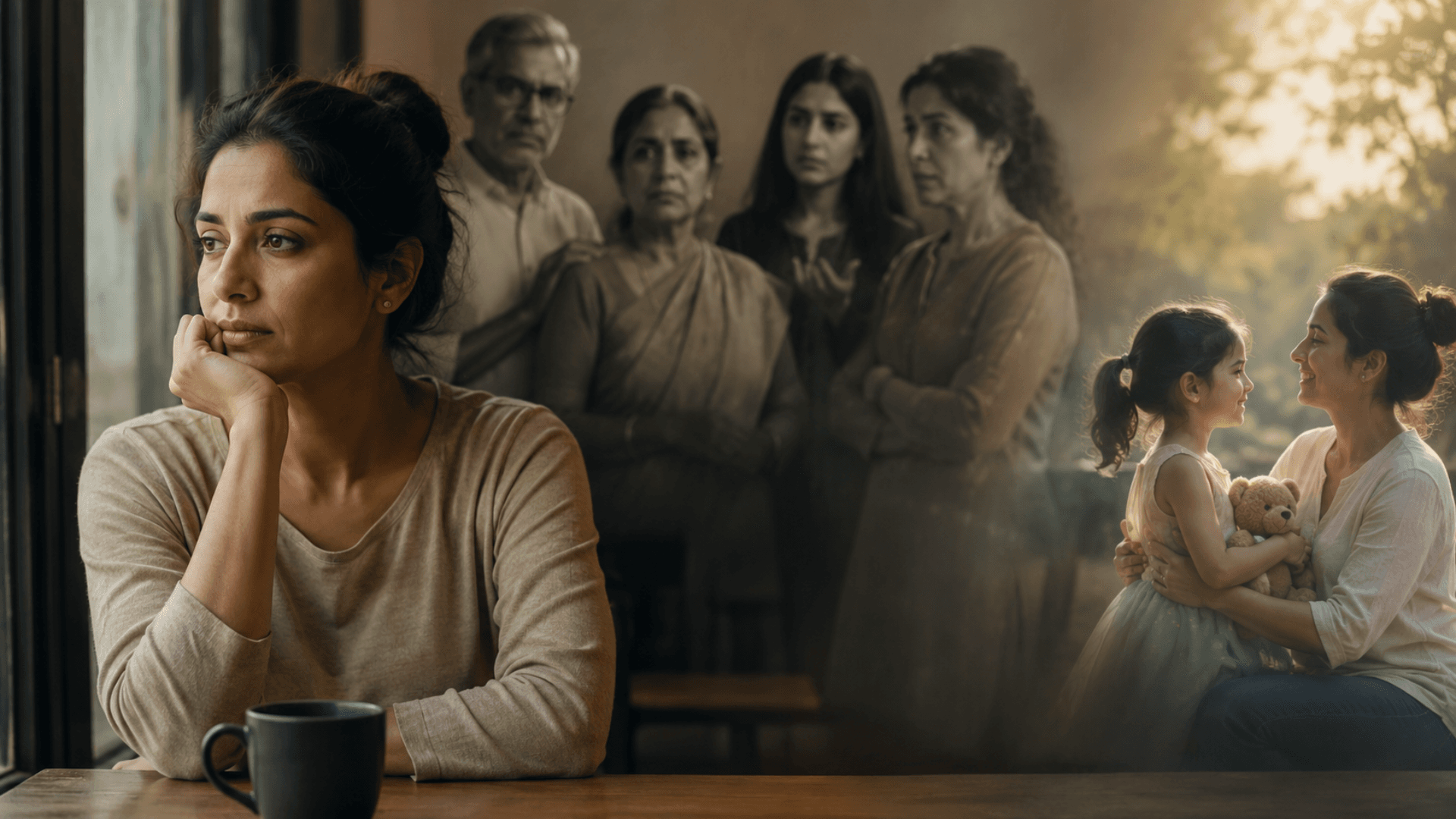
There is something quietly ironic about loneliness in Pune.
This is a city of over seventy lakh people. A city with a university culture so embedded that it has shaped the character of entire neighbourhoods. A city where chai tapris overflow every evening with conversation, where IT parks the size of small towns push thousands of young professionals into close quarters every morning, where the heritage of Peshwa culture sits right next to a rooftop bar in Koregaon Park.
Pune is not empty. It is not quiet. It is not cold.
And yet, ask any young professional who moved here for work in the last three years — from Nagpur, from Indore, from a smaller town in Maharashtra or beyond — and they will tell you the same thing in different words:
"It is surprisingly hard to make real friends here."
They have colleagues. They have flatmates. They have people to send memes to on WhatsApp. But genuine friendship — the kind where someone knows how your week actually went, where plans are made out of wanting to spend time together rather than obligation — that is harder to find than it looks.
This guide is for those people. And it is honest about why the usual advice does not quite work.
Why Making Friends in Pune as an Adult Is Genuinely Hard
Before we talk about solutions, it is worth being clear about the problem. Because most people assume they are the problem — that something about them is socially broken — when in reality, the difficulty of adult friendship is structural.
You Left Your Built-In Social System Behind
School and college friendship happened through forced, repeated proximity. You did not choose to sit next to that person every day. You did not plan the five years of shared canteen lunches. Proximity did the work for you.
When you arrive in Pune for a job at twenty-three or twenty-five, that system is gone. Nobody is assigning you a social group. Nobody is putting you in the same classroom as your future best friend for three years running.
You have to build from scratch. And nobody taught you how.
Pune's IT Culture Is Transactional by Design
Hinjewadi, Baner, Kharadi — these are brilliant professional ecosystems. But they are designed for output, not connection. Your colleague is a professional contact, not automatically a friend. The relationship starts from a transactional premise, and moving it to genuine friendship requires both people to consciously step outside that frame.
Most people never do. Not because they do not want to. But because work exhaustion is real, and social risk — the possibility of awkwardness — feels like too much at the end of a ten-hour shift.
PG and Flat Life Looks Social but Often Is Not
Living with flatmates seems like it should solve the problem. You share a kitchen. You share a building. Surely friendship follows?
Not automatically. Flatmates in Pune's Viman Nagar or Wakad circles are often from different workplaces, different schedules, different social comfort zones. The shared flat produces proximity, not necessarily depth. Many people live with three others for a year and remain, essentially, strangers in shared space.
Weekends Disappear Into Comfort
Friday arrives. The work week has taken something out of you. The easiest thing in the world is the sofa, a streaming service, and delivery food. This is not laziness — it is a completely rational response to exhaustion. But it compounds the isolation. And by the time Sunday evening arrives, there is that specific, familiar feeling: another week gone without a single meaningful conversation outside of work.
The Ways People Usually Try — And Why They Partially Work
Joining the Office Group
The first instinct is to stick with colleagues outside work too. Catch lunch together, share a beer on Friday. This is fine as a starting point and not fine as an entire social strategy.
Office friendships are bounded by work context. They are pleasant, often warm — but they carry the shadow of professional hierarchy and organisational politics. Vent too honestly about your manager over drinks and it is in the office ecosystem on Monday morning. The boundaries are real even when they are unspoken.
Colleagues can become genuine friends. But the office group is a starting point, not a destination.
Dating Apps for "Friendship Mode"
Some people — more than would admit it — turn to Bumble BFF or similar features to find platonic connections. The mechanics feel familiar. You scroll, you match, you plan a meeting.
The problem is that the infrastructure was built for romantic intention, and the psychological weight of that context does not disappear with a "friendship" label. Conversations feel like auditions. Every interaction is one-on-one, which removes the natural ease of group social dynamics. And the awkward first meeting — which in a genuine social setting has other people to absorb the pressure — becomes the entire event.
Some good friendships have started on dating apps in friendship mode. But it is a harder path than it needs to be.
Hitting the Same Café or Bar Repeatedly
Regulars become familiar faces at any good café in Koregaon Park or Baner. Baristas know your order. You recognise a few faces. But familiarity is not friendship. Recognition across a room does not convert to real conversation without a trigger — a shared moment, an introduction, a structured reason to talk.
Most people never cross that gap. They stay in the comfortable middle of familiar strangers.
What Actually Works: Practical Ways to Make Friends in Pune
1. Pursue Interests in Group Settings — With Consistency
The single most reliable way to build adult friendships is to pursue a genuine interest in a group setting, repeatedly, over time.
The interest matters less than the repetition. Running groups, cycling clubs, weekend trekking communities, pottery classes, photography walks — Pune has a surprisingly rich ecosystem of interest-based communities. The key is showing up more than once.
First attendance: you are a stranger. Second: a familiar face. Third: someone people are mildly happy to see. By the fifth or sixth, you are part of the fabric.
Pune-specific options worth knowing:
- Trekking groups — Sinhagad, Rajmachi, Lohagad and the Sahyadris are practically in Pune's backyard. The trekking community here is active, welcoming, and tends to run on genuine camaraderie rather than networking pretence.
- Cycling clubs — Early morning rides on the Katraj-Sinhagad road or the old Pune-Mumbai highway have regular groups. Shared physical effort bonds people faster than most conversations.
- Photography walks — Pune's heritage areas — Shaniwar Wada, Kasba Peth, Camp — attract photography enthusiasts on weekend morning walks. These tend to be small groups with easy conversation flow.
- Language exchange meetups — Pune's multilingual character (Marathi, Hindi, English, with increasing Kannada and Tamil presence from IT migration) creates genuine interest in language learning circles.
2. Volunteering — Underrated and Genuinely Effective
Pune has a genuinely active civil society. NGOs, environmental drives, literacy programmes, animal welfare organisations — most of them are perpetually short of weekend volunteers.
Volunteering works exceptionally well for friendship because it removes the awkwardness of the explicit "making friends" mission. You are there to do something. Conversation happens around the task. Shared effort builds faster rapport than any ice-breaker question ever could.
And the kind of people who spend their Saturdays volunteering tend to be — as a group — thoughtful, values-driven, and genuinely interesting to know.
3. Find Structured Social Environments With the Right Mix of Safety and Openness
This is where the advice gets specific, and where most generic "how to make friends" articles fall short.
The ideal environment for adult friendship-making has a few non-negotiable qualities:
- Structured enough that you are not left floating in a room of strangers with no idea how to begin
- Open enough that strangers naturally interact rather than staying in existing cliques
- Safe enough — particularly for women — that the evening feels comfortable from the start
- Small enough that you are not lost in a crowd of fifty, but large enough that the energy is alive
- Repeated enough that you can see the same faces again and build on an initial conversation
Most social environments in Pune — parties, bars, large events — fail on several of these. They are either too unstructured (a loud bar where you shout over music at people you cannot hear), too closed (gatherings of existing friend groups who are pleasant but not absorbing new members), or too large to make any individual interaction meaningful.
The environments that work are smaller, organised around activity or conversation, and designed specifically for people who are there to meet others — not just to exist in the same physical space.
4. Be the One Who Suggests the Next Plan
This is so simple it sounds obvious. It is not, in practice, obvious at all.
Most pleasant first interactions in Pune die because both people wait for the other to follow up. You have a good conversation at a workshop. You both genuinely mean it when you say "we should hang out." Neither of you sends the message first.
The person who builds their social circle fastest in any city is almost always the one who overcomes the mild discomfort of suggesting the next plan before they have been invited. Send the message. Suggest the café. Name a day.
The social risk feels larger than it is. The upside — an actual friend — is enormous.
5. Use WhatsApp Communities and Neighbourhood Groups Intelligently
Pune has a rich ecosystem of local WhatsApp communities — neighbourhood groups, interest-based communities, local resident circles. Most of these are dominated by event announcements, complaints about traffic, and the occasional restaurant recommendation.
But they also surface real social opportunities if you watch for them. Someone organising a neighbourhood clean-up. A group going to watch a match together. A chai circle forming at someone's terrace.
Respond to these specifically. "I would like to join" is infinitely better than reading and scrolling. Most of these invitations get few takers — partly because people scroll passively — and the ones who show up often end up as the nucleus of an actual group.
6. Say Yes to One Uncomfortable Thing Per Weekend
The most reliable expander of social circles is the rule of one uncomfortable yes per week.
You are invited somewhere you do not know many people. You are tempted to decline — it is easier, safer, more comfortable. Say yes anyway.
You see an event that interests you but you would be going alone. The thought of walking into a room of strangers is mildly daunting. Go anyway.
You hear about a workshop, a run, a game night. You already have plans to do nothing at home. Change the plan.
The uncomfortable thing almost never ends up being as uncomfortable as the anticipation suggests. And the people you meet in these slightly-outside-your-comfort-zone spaces are often the most interesting — because they too overcame the instinct to stay home.
Pune's Best Neighbourhoods for Social Connection
Not all of Pune is equally social in its character. Knowing where to focus your efforts matters.
| Neighbourhood | Social Character | Best For |
|---|---|---|
| Koregaon Park | Cosmopolitan, expat-friendly, culturally active | Creative types, cafe culture, events |
| Viman Nagar | Young professionals, students, high footfall | Quick connections, food trails, casual meetups |
| Baner / Balewadi | IT crowd, fitness-oriented, upscale | Running groups, gym communities, rooftop socials |
| Hinjewadi | Dense IT population, underserved socially | Workplace spillover, weekend escapees |
| Kothrud | Older-Pune culture mixed with student energy | Heritage walks, cultural events |
| Wakad | Growing residential, younger demographics | Building-level communities, new arrivals |
| Aundh | Mix of families and young professionals | Cycling, parks, morning groups |
The social trick in Pune is that geography matters. If you are in Hinjewadi, crossing to Koregaon Park for a social event every weekend is a commitment. Look for communities rooted in your own neighbourhood first — the friction is lower and the repetition is easier.
Real Story: Aditi in Viman Nagar
Aditi moved to Pune from Nashik at twenty-four for a product management role at a startup. Her first eight months were, by her own account, the loneliest of her adult life.
She had colleagues. She had a flatmate. She had her family on a video call most evenings. But the particular loneliness of not having a single friend in the city — not one person who would just ask, randomly, if she wanted to grab chai — was something she had not anticipated.
She tried the standard routes. Office outings that dissolved after one round of drinks. Instagram DMs to acquaintances that never converted to actual plans. One awkward Bumble BFF conversation that fizzled after three exchanges.
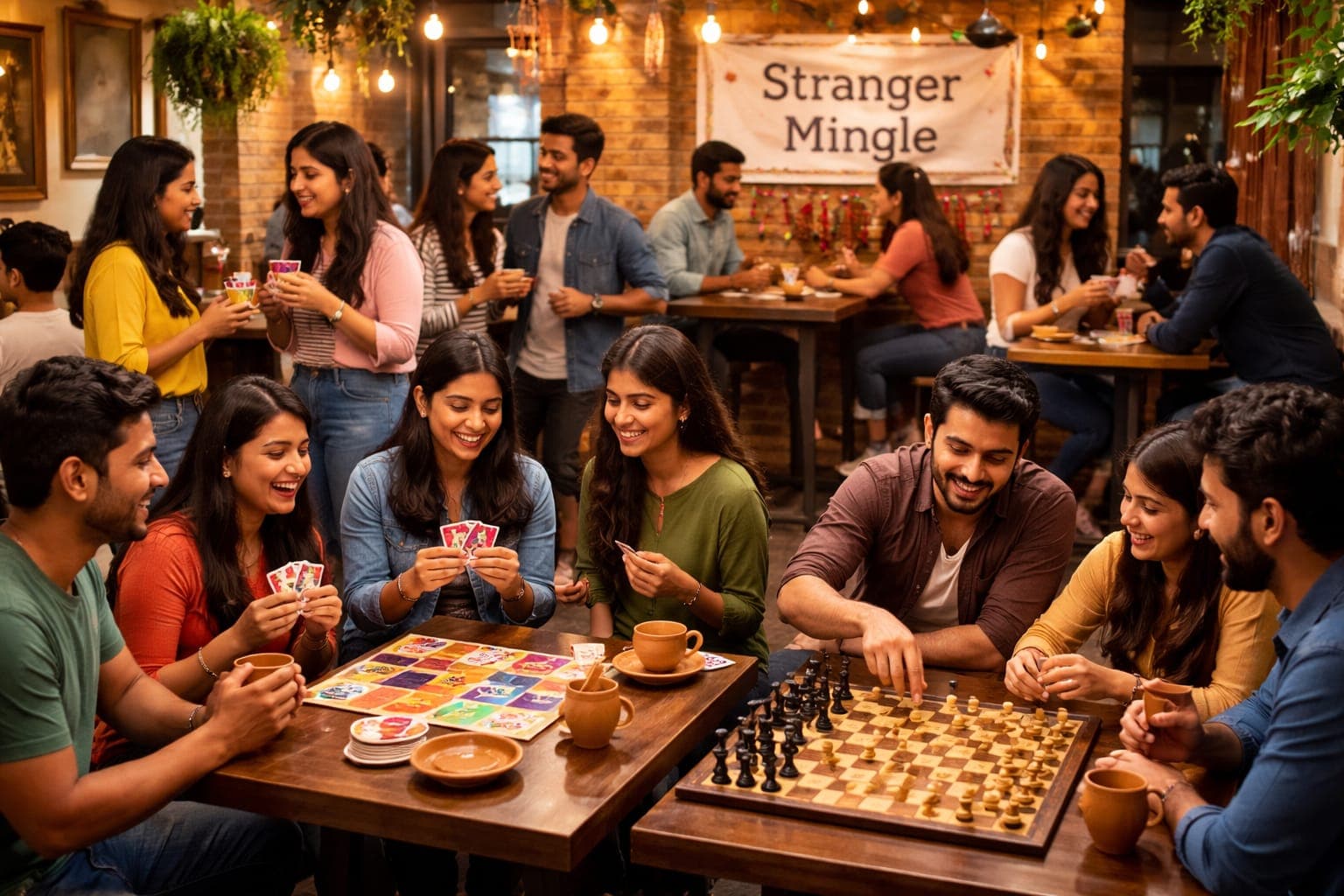
What actually changed things: she showed up, alone, to a structured stranger meetup event one Saturday evening — a board game night in Viman Nagar. She nearly did not go. She sat in the auto on the way there mentally composing her reason for cancelling.
She did not cancel.
That evening she played Codenames with seven people she had never met. By eleven o'clock, three of them were in a new WhatsApp group planning a trek to Rajmachi the following month.
Aditi now has, by her count, a genuine social circle in Pune. It started with one uncomfortable Saturday.
Common Mistakes People Make While Trying to Make Friends in Pune
Waiting for Friendship to Happen Organically
This works in college. It does not work in adult urban life. The organic conditions of repeated forced proximity no longer exist. You have to engineer the proximity deliberately.
Staying Exclusively in Existing Social Comfort Zones
If everyone you spend time with is from your office, your home state, or your college network, your social world will feel like a smaller and smaller circle. Diversity of background and context in friendships is not just enriching — it is protective against the echo chamber of overthinking and workplace stress.
Confusing a Pleasant Conversation With an Established Friendship
A good chat at an event is a first chapter, not a friendship. Friendship requires repetition, context, and a degree of mutual vulnerability over time. Treat good conversations as promising beginnings, not concluded outcomes.
Giving Up After One or Two Awkward Attempts
The first time at any new social environment is almost always somewhat awkward. You do not know the rhythm of the group. You are performing a version of yourself that is slightly stiffer than your natural self. This is completely normal. The mistake is concluding from this evidence that you are bad at making friends, rather than concluding that you need to show up again.
Looking for Perfect Compatibility Immediately
Deep friendships take months or years to develop. Early-stage friends are people you enjoy spending time with — full stop. Do not disqualify someone because the chemistry was not immediately electric. Some of the best friendships start as mild, pleasant acquaintances and deepen slowly through repeated shared experience.
The Specific Challenge for Women Making Friends in Pune
Women navigating social life in Pune face an additional layer of consideration that men often do not have to think about: safety.
Evening events, unfamiliar venues, groups of strangers — these carry a different weight for women, and dismissing that weight as irrational does nobody any good.
The practical effect is that women often self-select out of exactly the kind of social opportunities that would help them build their circles — the evening meetup, the late-start game night, the spontaneous post-event chai run with people they just met.
What makes a social environment safe enough for women to show up with genuine ease?
- Verified participants, not anonymous attendees
- Public venues in accessible locations
- Small, managed group sizes where everyone can be seen
- Clear organisers who are accountable and present
- An explicit zero-tolerance policy on harassment, not just assumed
- Other women already present and visibly comfortable
These are not impossible standards. They are simply specific ones. And environments that meet them genuinely open social life in Pune for women in ways that general, unstructured social settings do not.
Why Structured Meetup Events Work Better Than You Expect
If you have never attended an organised stranger meetup — the kind where people explicitly come to meet new people — your mental image of it is probably worse than the reality.
Most people imagine something between a networking event (transactional, name-tag-wearing, business-card-swapping) and a blind date (one-on-one, high-stakes, pressured). Neither image is accurate.
Well-designed social meetups work because:
The premise removes awkwardness. Everyone is there for the same reason. Nobody is pretending they ended up in the same room by accident. The shared acknowledgment — "we are all here to meet people" — actually makes conversation easier, not harder.
Activity-anchored events give you something to do. Board games, trivia nights, group treks, craft workshops — when there is a shared activity, conversation happens around it naturally. You do not have to manufacture reasons to speak. The game gives you a reason. The trail gives you a reason. The task gives you a reason.
Small group sizes make everyone count. In a group of twenty-five people, you cannot disappear into the wallpaper. You will interact. You will be introduced. You will have at least three or four real exchanges by the end of the evening.
Repetition is built in. The best part about a regular event series is that the people who attend once tend to attend again. Which means the second time you show up, you already know faces. Acquaintances deepen into friendships simply because the infrastructure for repetition already exists.
Pune now has structured social events of this kind available on most weekends — board game nights in Viman Nagar cafes, group treks into the Sahyadris, evening chai circles in Koregaon Park, heritage walks through the lanes of Kasba Peth. You do not have to manufacture your social occasions from nothing. The occasions already exist. You just have to show up.
The Mindset Shift That Makes Everything Easier
Here is the most honest thing about making friends as an adult in any city, including Pune:
Most people are waiting for someone else to take the first step.
Your potential best friend in this city is also sitting at home on a Sunday evening wishing they had more people to call. They are also overthinking whether to respond to that event post they saw. They are also worried about showing up alone somewhere new.
This is not discouraging information. It is liberating.
You are not uniquely bad at this. You are not missing some social gene that other people have. You are simply in the same condition as most of the interesting, busy, slightly-isolated adults in this city — waiting for someone to go first.
Go first.
Show up to the event you have been thinking about. Message the person you had a good conversation with last week. Suggest the plan. Book the ticket. Walk in alone.
That decision — the quiet, slightly uncomfortable one — is where every good friendship in your Pune chapter actually begins.
Your Next Step
Pune is full of people worth knowing.
They are in the Hinjewadi offices, the Baner cycling tracks, the Viman Nagar board game nights, the Koregaon Park cafés, the Rajmachi trailheads. They moved here from somewhere else, or grew up here and watched their school circle scatter. They are good at their work and uncertain about their weekends.
They are, in other words, exactly like you.
The gap between where you are and a full, rich social life in Pune is not talent. It is not charm. It is not even time.
It is one decision, made once, on one weekend.
If you are ready to make it — browse the upcoming weekend events in Pune, designed specifically for people who want to build real friendships in a safe, curated, genuinely fun environment. Come alone. Most people do.
Your next friend in this city is already registered. They are just waiting for you to show up.